
Sustainable Flooring Solutions for Modern Living
Key Takeaways
- Understanding the importance of sustainable flooring in reducing environmental impact.
- Exploring various eco-friendly flooring materials and their benefits.
- Learning practical tips for selecting and maintaining sustainable flooring.
Table of Contents
- Importance of Sustainable Flooring
- Popular Eco-Friendly Flooring Options
- Choosing the Right Sustainable Flooring
- Maintenance Tips for Sustainable Floors
- Future Trends in Sustainable Flooring
In today’s world, making sustainable choices in our homes is more important than ever. Homeowners are now prioritizing flooring options that deliver on style and durability while also minimizing environmental impact. Leading providers like Silver State Flooring are at the forefront, offering a wide array of environmentally responsible choices that blend beautifully into contemporary lifestyles. The right flooring can elevate the aesthetic of your space and foster a healthier living environment, underscoring the significance of eco-friendly materials. Whether you are building new or renovating, choosing the right sustainable flooring option requires awareness of what materials are available and how they impact the world around us. Innovative flooring solutions go far beyond simply replacing traditional products, addressing everything from resource renewability to indoor air quality. Knowing what to look for and how to maintain your selection ensures your investment stands the test of time, benefiting both your household and the environment.
With a surge in demand for eco-conscious home improvement, education on these materials has become vital. Research has shown that sustainable flooring can lead to significant reductions in resource consumption and waste, further supporting a greener future for our communities. The movement towards sustainable choices is not simply a trend, but a meaningful shift towards responsible home design. Modern flooring solutions now prove that you do not have to sacrifice design sensibilities for the sake of the planet. Understanding which materials fit your values, how they are sourced, and what maintenance they require is key. This article explores the options, benefits, and best practices to help guide your decision, ensuring your next flooring project supports modern living and environmental stewardship.
Importance of Sustainable Flooring
Sustainable flooring plays a major role in protecting the environment by relying on renewable resources, minimizing waste, and supporting eco-conscious manufacturing processes. These materials often require less energy and fewer chemicals to produce, thereby lowering greenhouse gas emissions and reducing reliance on synthetic products. Sustainable floors often contain fewer volatile organic compounds (VOCs), improving indoor air quality and creating a safer, healthier atmosphere within your home. For families with allergies or sensitivities, this benefit is especially crucial.
Making sustainable choices in flooring is also about long-term responsibility. By selecting renewable and durable options, homeowners help conserve natural resources and promote practices that protect forests, water, and wildlife habitats. Sustainable flooring is a smart and forward-thinking approach that aligns with current efforts to mitigate climate change and foster more resilient urban and residential development.
Popular Eco-Friendly Flooring Options
Bamboo Flooring
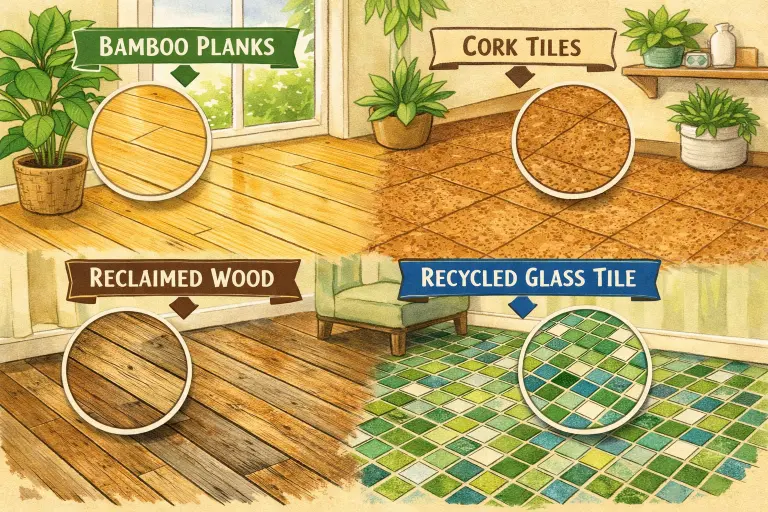
Bamboo is highly regarded for its rapid renewal, reaching harvest maturity in just three to five years. It is engineered for strength and can withstand heavy foot traffic, sometimes even exceeding the durability of traditional hardwoods. Stylistically versatile, bamboo complements modern architecture and minimalist interiors while supporting reduced deforestation.
Cork Flooring
Cork is extracted from the bark of cork oak trees without causing harm to the plant. Remarkably, cork trees regenerate their bark, making this material both ethical and sustainable. It delivers natural thermal and sound insulation, is gentle underfoot, and discourages mold, mildew, and pests, making it ideal for kitchens, bathrooms, and basements.
Reclaimed Wood
Choosing reclaimed wood preserves mature trees and gives new life to timber that might otherwise end up in landfills. Salvaged from old barns, warehouses, or dismantled homes, each reclaimed wood plank adds exceptional character and a glimpse of history to interior spaces. Its reuse also lessens the environmental impact compared to new lumber operations, preserving biodiversity in forests.
Linoleum
Made from natural components like linseed oil, wood flour, and jute, linoleum has returned as a favored choice for eco-conscious homes. Long-lasting, biodegradable, and available in a spectrum of colors and styles, linoleum is appreciated for its resilience and ease of installation. It is naturally anti-bacterial, making it ideal for health-sensitive environments such as schools and hospitals.
Recycled Glass Tile
Recycled glass tiles blend style with sustainability, made from post-consumer glass sourced from bottles and windows. These tiles not only decrease landfill waste but also produce dazzling visual effects as they reflect light, transforming floors and walls in bathrooms, kitchens, and entryways. They are stain-resistant and easy to maintain, supporting both functionality and environmental objectives.
Choosing the Right Sustainable Flooring
Selecting the perfect sustainable flooring comes down to balancing practical needs with personal design preferences. Key factors include the materials’ geographic origin (locally sourced options minimize the carbon footprint), overall durability, ease of maintenance, and compatibility with your desired aesthetic. It is wise to verify that your chosen products carry reputable environmental certifications, such as the Forest Stewardship Council (FSC) label, which indicates responsible harvesting and supply chain practices. Before purchasing, examine the manufacturer’s transparency and assess whether the adhesives and finishes used contain low- or no-VOCs. Finally, discuss your lifestyle with your flooring provider to ensure your new surface will withstand your household’s foot traffic and usage patterns.
Maintenance Tips for Sustainable Floors
- Clean floors regularly using non-abrasive, biodegradable cleansers that will not strip protective finishes or introduce toxins.
- Install protective pads beneath furniture legs to prevent scratches, dents, and premature wear.
- Maintain consistent indoor humidity to prevent swelling, contraction, or warping, especially with wood-based flooring systems.
Routine care and careful cleaning ensure your investment lasts while maximizing the environmental and aesthetic value of your flooring choice. Following these tips not only preserves your home’s appeal but also upholds the integrity of your eco-friendly commitment.
Future Trends in Sustainable Flooring
Innovations in the flooring industry continue to push the boundaries of sustainable design. The integration of advanced recycling methods, biobased resins, plant-based finishes, and modular flooring systems is driving even greater reductions in the use of virgin materials. Trends indicate a growing demand for personalized flooring made from reclaimed and upcycled products, as well as expanded color palettes and texture options. With homebuyers and builders more eco-conscious than ever, flooring solutions are expected to become integral to green building certifications and real estate valuations.
Adopting sustainable floors is a future-proof choice that reinforces homeowner values and delivers lasting benefits. Not only do these solutions support a healthier planet, but they also create sophisticated, joyful living environments for today and future generations.
Also Read
