
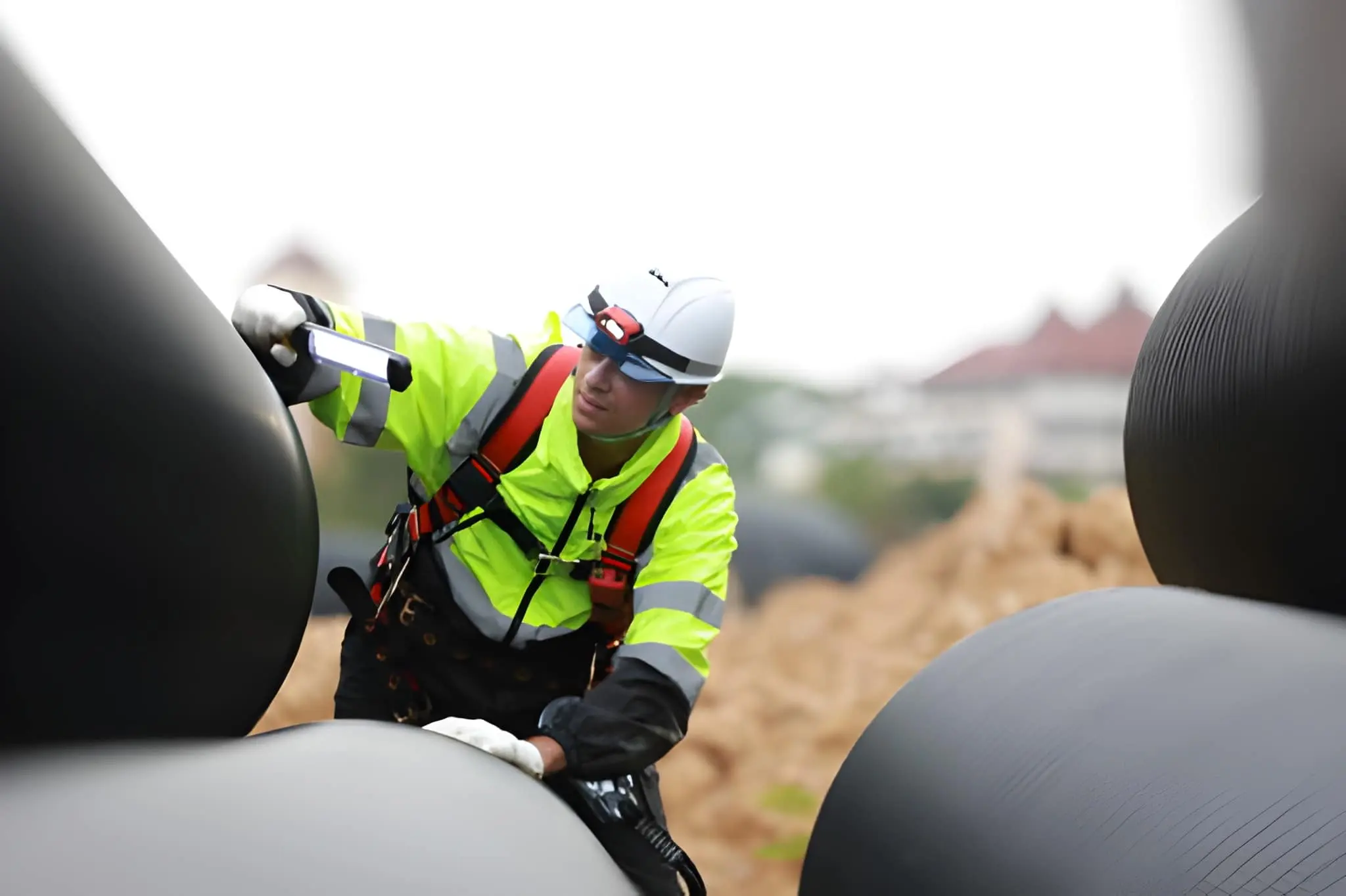
Emerging Materials & What They Mean for Pipe Inspection Companies
If you’ve been in the industrial world long enough, you’ve probably noticed that piping materials are changing — fast. And honestly, it’s kind of exciting. For decades, steel was the unquestioned king. If someone said “industrial pipeline,” everyone automatically pictured steel or maybe ductile iron. That was just the default.
But now? Composite pipes, fiberglass-reinforced plastics, polymer blends, exotic coatings… it’s like we’re entering this new age of “smart materials.” And while these upgrades are great for durability and corrosion resistance, they also come with a little twist: pipeline inspection services companies suddenly have to rethink their whole playbook.
So let’s talk about what’s actually happening, without getting too lecture-y or robotic.
Composite Pipes: Why Everyone’s Suddenly Obsessed
Composite pipes aren’t exactly brand-new, but they’re definitely having their moment. You’re seeing them in oil & gas, chemical plants, water systems, desalination plants — even industries that used to swear by steel are now experimenting with them.
And the reasons make sense:
- They don’t rust
- They’re lighter (your maintenance crew will thank you)
- They stand up well in aggressive chemical environments
- They can handle surprising pressure levels for their weight
Plus, the long-term cost savings are real. Less corrosion = fewer repairs = fewer shutdowns = happier managers.
But here’s the part we don’t talk about enough: while these materials solve a bunch of old problems, they create new inspection challenges.
Inspection Challenges Nobody Warns You About
With steel, we know the game. You’ve got ultrasonic testing, magnetic particle, radiography, eddy current… the classics. Decades of data. Tons of practical experience.
But composites? Whole different creature.
1. Traditional NDT Doesn’t Always Work the Same
Most inspection teams quickly learn that:
- Magnetic particle testing? Nope — you need metal for that.
- Eddy current? Um… good luck.
- Radiography? Works, but the interpretation is trickier.
- UT? Yes, but with special calibration and techniques.
You can’t treat composite materials like steel. The internal structure (fibers + resin) creates layers, reflections, odd acoustic behavior… basically, the inspector has to know what they’re doing or the results are going to look like abstract art.
2. Damage in Composites Is Sneaky
Steel gives you nice, visible clues:
- Rust
- Bulging
- Pitting
- Wall thinning
Composite damage? It can hide. Delamination, fiber breakage, resin voids — these things happen inside the material before anything shows on the outside. It’s like the pipe is quietly falling apart out of sight.
3. Temperature & Environmental Sensitivity
Composites react differently to heat and UV exposure compared to metals. Think of it like how plastic water bottles warp in the sun — same principle, just more industrial and hopefully less dramatic. Tank inspection companies inspectors need to understand environmental aging to assess long-term risks correctly.
New Tools & Techniques That Are Becoming Essential
So, what’s actually helping inspection companies keep up?
Advanced Ultrasonic Testing (A-Scan, C-Scan, Phased Array)
These can map internal defects way better than old-school UT. Phased array especially has become a lifesaver for detecting delamination.
Thermography (Infrared Testing)
Super useful for identifying voids or trapped moisture inside the composite layers. A temperature difference can reveal a lot.
Laser Shearography
Yes, the name sounds like a sci-fi weapon, but it’s great for composite surfaces. It visually shows strain variations so inspectors can see hidden anomalies.
Acoustic Emission Monitoring
If a fiber breaks or resin cracks, it makes tiny sounds. Sensors pick those up. It’s like the pipe is tattling on itself.
What Pipe Inspection Companies Need to Do?
The shift to composite materials isn’t something inspectors can ignore. If anything, it’s a wake-up call. Inspection companies need to:
- Train technicians specifically for composite behavior
- Upgrade their NDT tools (sorry, it’s just unavoidable)
- Build new inspection procedures instead of copy-pasting steel standards
- Educate clients — because many owners still think composites are “maintenance free” (huge myth!)
Companies that adapt will stay ahead. The ones that don’t? Well… they’ll be stuck trying to inspect modern pipelines with outdated methods, and that never ends well.
FAQs
1. Are composite pipes easier or harder to inspect than steel?
They’re not necessarily harder — just different. The inspector has to understand composite behavior and use the right tools, or the results won’t make sense.
2. Do composite pipes last longer than steel pipes?
In many environments, yes. They resist corrosion and chemical attack better. But they can fail from delamination or manufacturing defects, so regular inspections still matter.
3. Is ultrasonic testing still useful?
Absolutely. But it needs to be adapted — calibrations, frequencies, and techniques must be optimized for composite layers.
4. Are composite pipes completely corrosion-proof?
They don’t rust like steel, but they can still degrade from chemicals, UV exposure, impact damage, or poor installation.
5. Will all industries switch to composites?
Not necessarily. Steel still has advantages in very high-temperature or ultra-high-pressure environments. But composites are definitely expanding fast.
