
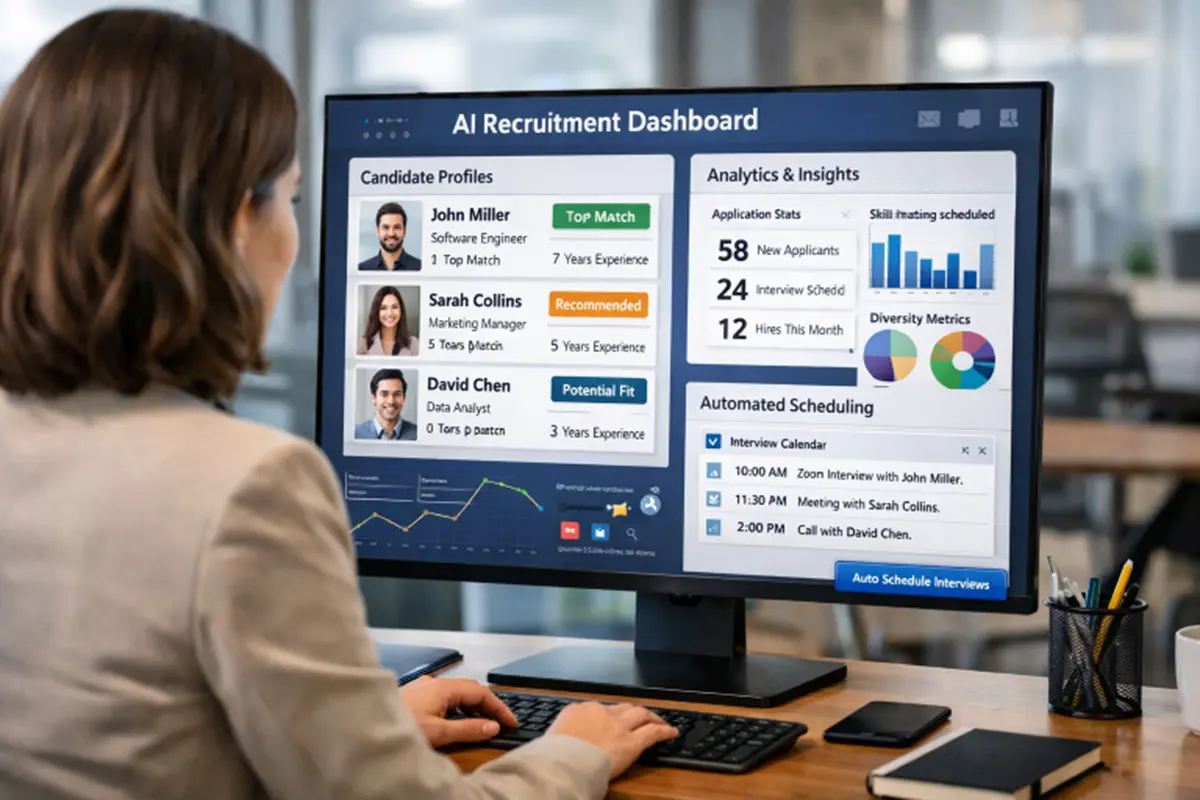
How AI Is Redefining Recruitment Processes
Key Takeaways
- AI improves the speed and effectiveness of candidate sourcing and screening.
- AI technology can help reduce bias and support equitable hiring practices.
- AI-driven automation boosts candidate engagement by personalizing communication and streamlining processes.
- Challenges remain around ensuring fairness in AI algorithms and maintaining essential human oversight.
- The future of hiring will require a balanced partnership between AI systems and human recruiters.
Table of Contents
- Enhancing Candidate Sourcing and Matching
- Streamlining Resume Screening
- Automating Interview Scheduling and Assessments
- Reducing Bias in Hiring
- Improving Candidate Experience
- Challenges and Considerations
- The Future of AI in Recruitment
Artificial Intelligence (AI) is rapidly reshaping recruitment, elevating hiring strategies with advanced automation and data-driven insights. By embedding machine learning and AI algorithms into the recruitment workflow, organizations benefit from faster, smarter, and more consistent hiring decisions. Explore how AI is making the future of talent acquisition more accessible, efficient, and fair. Industry leaders are leveraging AI sourcing tools as integral parts of their recruitment arsenal to streamline sourcing, candidate screening, and personalized engagement. These tools give recruiters a significant edge in finding and matching top talent in a competitive market.
As companies face unprecedented volumes of job applications and rising expectations for candidate experience, traditional hiring methods are no longer enough. AI technologies enable recruitment teams to analyze large datasets, identify high-potential candidates, and nurture relationships at scale, all while making the process more objective and transparent. From reducing unconscious bias to automating scheduling, AI’s impact extends across every stage of recruitment. At the same time, organizations must approach this transformation thoughtfully, ensuring ethical AI implementation and maintaining a human touch for crucial interpersonal evaluations.
Enhancing Candidate Sourcing and Matching
AI-powered solutions have revolutionized how recruiters source and match candidates to job openings. These intelligent platforms process enormous volumes of applicant data, evaluating not only skills and experience but also preferences and personality traits to predict job fit. Modern AI sourcing tools quickly filter through global talent pools, highlighting candidates who closely align with job requirements, helping hiring teams reduce time-to-fill and cost-per-hire. In today’s talent market, using AI for sourcing means recruiters can find high-quality candidates who might otherwise go unnoticed in traditional searches. According to TechRadar, AI-driven platforms help organizations improve talent matching, saving countless hours and enabling better hiring outcomes.
Streamlining Resume Screening
Screening resumes manually is both labor-intensive and error-prone. With AI-driven parsing and evaluation, recruitment teams can automatically sort, rank, and shortlist applicants. Leveraging natural language processing, these systems review not just keywords but the full context of resumes, producing a more accurate, holistic understanding of candidates. Recruiters can focus promptly on top contenders while reducing the risk of overlooking promising applicants. As noted by the Harvard Business Review, such automation helps make the initial stages of hiring more rigorous and less influenced by fatigue or unconscious bias.
Automating Interview Scheduling and Assessments
AI tools alleviate one of the most time-consuming administrative burdens in recruitment: scheduling interviews. With intelligent calendars and automated communication, interview scheduling becomes efficient and error-free, allowing both candidates and hiring managers to coordinate more effectively. Beyond logistics, new AI assessment platforms can even conduct initial video or chat-based interviews, giving preliminary feedback on candidate responses and competencies. These tools ensure that only the most qualified applicants advance, freeing up recruiters to focus on more nuanced aspects of hiring.
Reducing Bias in Hiring
When intentionally designed, AI can help remove many of the biases that influence human decision-making in recruitment. By focusing on objective qualifications rather than subjective criteria, well-built AI models select candidates based on merit, potentially widening access to underrepresented groups and driving workplace diversity. However, it is essential to monitor for and address any unintended biases in the underlying algorithms or datasets. Continual auditing, transparent processes, and human oversight are essential to ensure that bias is truly minimized and ethical hiring standards are upheld.
Improving Candidate Experience
AI enhances every step of the candidate journey, ensuring timely, relevant, and personalized communication. Chatbots and AI-driven virtual assistants can promptly answer questions, provide application updates, and offer guidance, which improves engagement and satisfaction. Automated systems streamline document submission, reference checks, and feedback, creating a smoother and more responsive hiring process. As a result, candidates feel valued and respected, regardless of the outcome, which in turn supports a stronger employer brand and better talent attraction in the long run.
Challenges and Considerations
The rapid adoption of AI in recruitment brings several critical challenges. Ensuring fairness in AI-driven decisions requires regular system reviews and clear ethical guidelines. Over-reliance on automation can strip out personal judgment essential for evaluating cultural fit, communication skills, and adaptability. Organizations must balance efficiency with empathy, keeping experienced recruiters involved in key decision points. Regulatory uncertainties and evolving privacy expectations also require hiring teams to remain vigilant about data security and candidate consent as they implement new technologies.
The Future of AI in Recruitment
Looking ahead, recruitment is poised for a balanced partnership between artificial intelligence and human expertise. AI will continue to drive process improvements by shouldering repetitive and data-driven tasks, but recruiters will play an indispensable role in areas where empathy, intuition, and emotional intelligence count. The recruitment teams that thrive will be those who blend smart technology with authentic human connections and adapt their strategies as AI capabilities evolve. As the use of AI in hiring expands, the emphasis must remain on building fairer, more diverse, and highly capable workforces through thoughtful, ethical integration of these powerful tools.
Ultimately, AI is delivering a transformative leap for recruitment. By adopting AI-driven sourcing, screening, and engagement platforms, organizations can achieve faster, more objective, and candidate-friendly outcomes, setting a new standard for talent acquisition in the digital age.
Also Read
