

Minimalist Design Principles in Home & Lifestyle: Lessons From High-End Craft
In recent years, minimalist design has moved far beyond a décor trend, it has become a guiding philosophy for how we shape our living spaces, wardrobes, and daily experiences. The appeal lies not simply in owning fewer things, but in choosing objects with intention, beauty, and longevity. The same philosophy applies to refined accessories and personal items: a piece like Tudor watches shows how thoughtful design can elevate something functional into something quietly meaningful. Minimalism invites us to surround ourselves only with what adds value, clarity, and purpose.
This approach translates into homes that feel calming rather than cluttered, wardrobes that feel expressive rather than overflowing, and lifestyles shaped around depth rather than accumulation. And perhaps unexpectedly, many of the clearest lessons about minimalism can be found in the world of high-end crafts and heritage-level product making.
The Philosophy Behind Simplicity
Minimalism does not mean emptiness, and it certainly does not mean lack of personality. Instead, it begins with the question: What truly matters, and what simply takes up space? A home that reflects this perspective feels light, open, and easy to move within. The same principle is visible in the world of well-crafted timepieces: many designs, such as Seiko watches, prioritize clean dials, balanced proportions, and purposeful function rather than unnecessary embellishment. The focus is on what enhances use and expression, not on visual noise.
Understanding this shift allows us to see minimalism not as a restriction, but as an opportunity to choose better. When the excess is removed, quality has room to stand out. The items we live with gain presence because they are not competing for attention.
Craftsmanship as a Teacher of Restraint
High-end craft is built on the belief that every line, material, and detail should justify its place. A well-made wooden table, for example, needs no ornate carvings to be beautiful. Its proportions, grain, joinery, and tactile presence speak for themselves. In the same way, a perfectly weighted glass vase or a meticulously tailored jacket does not need bold prints or excessive decoration to feel luxurious.
Craftsmanship teaches us that restraint is not absence, it is intention.
Things made with care often feel immediately different when held or used. Their simplicity allows their material character to shine. This is where minimalism draws its emotional potency: the subtle confidence of an object that knows its purpose.
The Home as a Calm Landscape
When designing a minimalist home, the goal is not to empty the room, but to shape a foundation for clarity and comfort.
Some guiding considerations include:
1. Space to breathe.
Furniture should support natural movement, leaving pathways open and uninterrupted.
2. Materials that age gracefully.
Natural wood, stone, brushed metal, linen, and wool develop character rather than wear out.
3. Neutral palette as a quiet backdrop.
Soft neutrals and earth tones let shape, light, and shadow become the room’s visual language.
4. Focal points rather than many distractions.
A sculptural chair or an architectural light fixture has more impact when not surrounded by clutter.
When every object has a role, rooms feel grounded. Even everyday routines, making coffee, reading a book, preparing a meal, feel less rushed and more present.
Lifestyle Minimalism: Choosing What Supports You
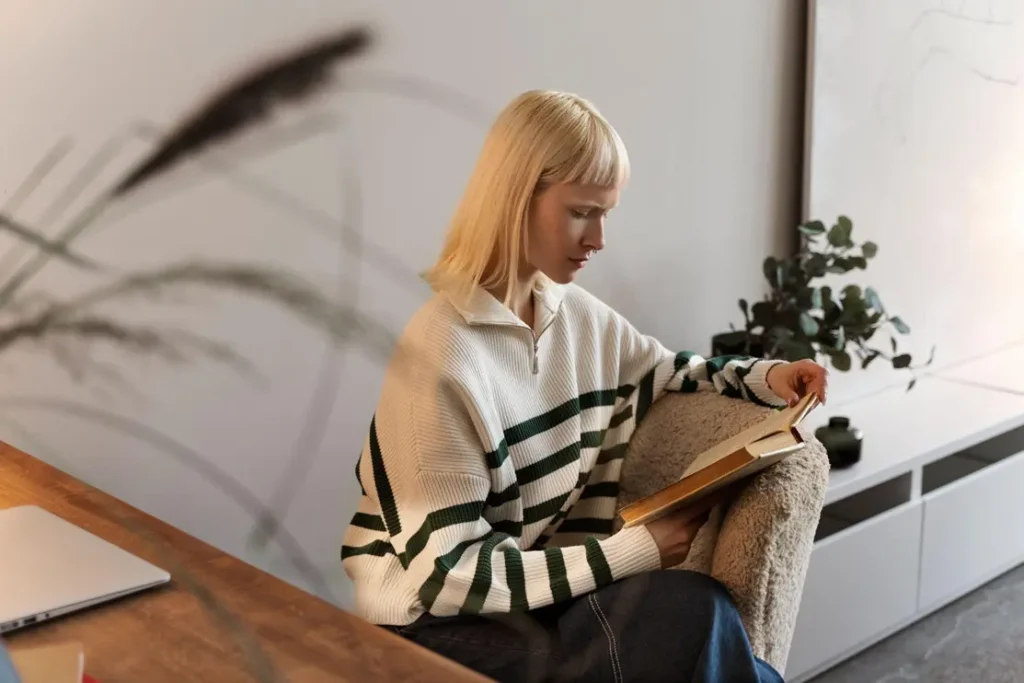
Minimalist living is not only about your physical surroundings. It includes habits, routines, and the emotional texture of your day.
Ask:
- Does this item, habit, or commitment add meaning or energy?
- Or does it consume attention without offering something in return?
The goal is alignment, the sense that your environment, schedule, and possessions support your life rather than control it.
This philosophy can also be felt in personal style. A wardrobe built around timeless, well-fitted essentials makes dressing effortless. A single, well-chosen accessory speaks louder than a collection of trend-driven items. Minimalism encourages emotional clarity by reducing decision fatigue and noise.
Where Minimalism Meets Comfort and Warmth
A common misconception is that minimalist spaces feel cold. But warmth comes from texture, light, and human presence, not from excess decoration. Interior designers often emphasize that the emotional tone of a room is shaped not by how many objects it contains, but by how intentionally those objects are chosen. Architectural Digest highlights that layering natural materials and working with soft, diffused light can create inviting spaces even when the décor is restrained, proving that simplicity and comfort are not opposites, but complements.
A minimalist home may include:
- Soft, layered textiles such as linen throws, cotton gauze, or wool rugs that add tactile depth and gentle visual movement.
- Natural light emphasized through unblocked windows, sheer curtains, or strategic use of reflective surfaces to keep rooms open and bright.
- Pieces that carry personal meaning, such as a chair inherited from family, a handmade mug, or a single framed photograph, items that tell a story rather than fill a shelf.
Minimalism is not about removing personality. It is about refining it, creating enough quiet space around the things you care about that they can be felt, more clearly, more softly, more deeply.
Closing Thought: Less Noise, More Meaning
Minimalism invites us to pay attention to the quality of what we own, the environments we shape, and the way we choose to live. Just as thoughtful craft turns everyday objects into lasting companions, minimalist design can turn our surroundings into spaces where we feel calm, centered, and connected to what matters.
It is not about living with less, it is about living with enough, intentionally chosen.
Also Read-Embracing Life: Living with Passion, Purpose, and Resilience
