
Calculating the True Cost of Cloud Computing for Businesses
As organizations increasingly rely on digital infrastructure, cloud computing stands out for its scalability and financial flexibility. Businesses of all sizes turn to the cloud to streamline their operations, but the reality is that actual costs can be difficult to pinpoint accurately. It’s not just subscription fees—successfully managing cloud expenses requires a thorough examination of both direct payments and less obvious hidden costs. To accurately forecast and control these expenses, companies utilize advanced financial modeling tools, such as an AI agent ROI calculator. These tools help estimate returns on investment, providing a solid foundation for budget planning.
While cloud computing offers operational agility, its cost complexity can lead to unanticipated expenses and budget overruns. Companies often focus on transparent pricing but may not consider the additional costs associated with scaling workloads. Effective financial management in the cloud is crucial for avoiding unexpected expenses and maximizing long-term value. Achieving visibility into all cost factors can prevent overspending and enable reinvestment in innovation. As the cloud market evolves, understanding cloud costs helps organizations refine their technology strategies and improves operational governance.
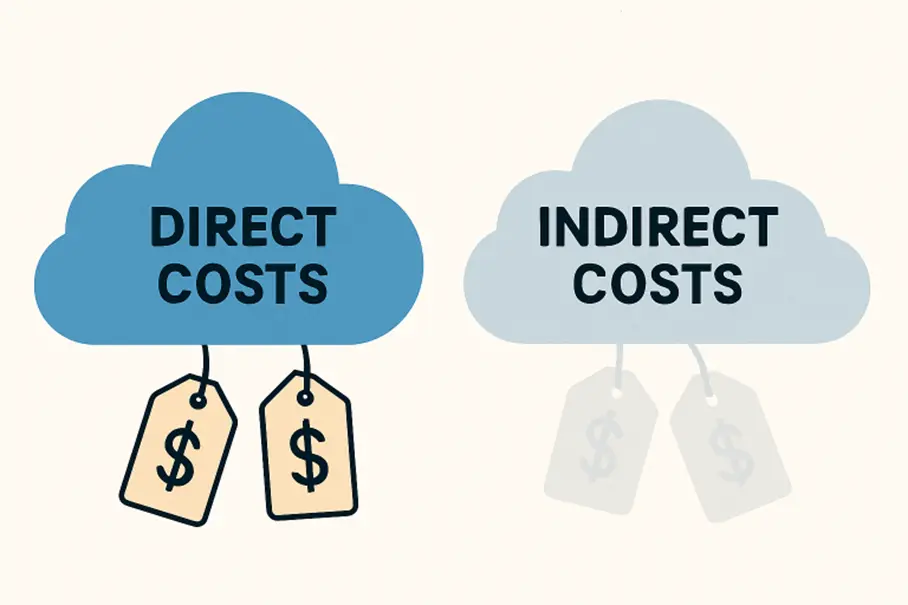
Direct Costs: The Obvious Expenses
Direct costs are usually the first line items that catch the eye when evaluating cloud services. These include subscription fees—often monthly or annually contracted—along with pay-as-you-go plans that allow organizations to scale resources in real-time. Service providers often advertise these costs prominently, typically for compute instances, virtual machines, and managed storage.
Although direct expenses are relatively easy to predict and allocate, businesses must be vigilant about provisioning only the resources they actually require. Overestimating needs or neglecting periodic reviews can lead to rapid increases in cloud spending. Automating resource management and adopting usage-based payments help keep costs aligned with demand, providing a flexible operational model without excessive financial commitment.
Indirect Costs: The Hidden Expenses
Many companies are caught off guard by the less visible, yet often substantial, indirect costs of cloud adoption. A leading example is data transfer fees, which can account for up to 20% of a cloud bill for data-intensive businesses. These charges stem from moving information between the cloud and external systems, especially across regions or into on-premises environments.
Another significant indirect expense comes from overprovisioning. When businesses allocate more resources than necessary for peak workloads, unused capacity unnecessarily drives up their bills. According to a Gartner report, nearly one-third of cloud spending is wasted due to idle or unused resources, underscoring the importance of ongoing resource optimization in controlling long-term costs.
Security-related costs also lurk beneath the surface. Visibility gaps—such as the lack of comprehensive cost-monitoring tools or missing usage data—can result in both operational inefficiencies and increased risk. Studies indicate that 82% of cloud security breaches are traced back to these gaps, highlighting the need for integrated security and monitoring solutions.
Performance vs. Cost: Striking the Right Balance
Choosing the right cloud instance types is essential for optimizing both performance and cost. Major cloud providers, such as AWS, Azure, Google Cloud, and OCI, offer a range of compute platforms tailored to different workloads. Comparative research demonstrates that while ARM-based instances offer exceptional price-performance value for cost-sensitive applications, businesses running more complex, enterprise-grade workloads may prefer Intel-based instances due to their proven versatility and reliability.
The capacity to match infrastructure to workload requirements prevents overspending and supports business objectives. Benchmark studies enable IT leaders to make data-driven decisions about instance selection, ensuring that resources are precisely matched to demand.
Cost Optimization Strategies
- Implement FinOps Practices: Embracing Financial Operations (FinOps) helps unify technology, finance, and business stakeholders. By adopting these practices, companies can enforce budgets, proactively flag spending anomalies, and drive transparency throughout the cloud lifecycle. Automated tools can streamline budget analysis and cloud usage surveillance, making it easier to stay on track.
- Leverage AI for Cost Management: Artificial intelligence presents a transformative opportunity in cloud cost management. AI-powered platforms predict usage trends, optimize resource allocation, and automate purchases of the most financially advantageous service plans. These tools have become crucial for enforcing policy-driven governance and ensuring maximum ROI.
- Regularly Review and Right-Size Resources: Continuous assessment of resources is essential for minimizing waste. Regularly auditing cloud workloads and decommissioning or re-sizing underutilized resources ensures you only pay for what’s necessary and avoid “cloud sprawl.”
Successful cost optimization relies on a combination of financial discipline, a collaborative culture, and advanced tools. From budgeting to operational review, taking a holistic approach empowers organizations to not only realize cloud savings but also reinvest those gains into innovation and value creation.
Conclusion
The shift to cloud computing enables businesses to grow, innovate, and compete in rapidly changing markets. Yet, harnessing these advantages sustainably depends on understanding and managing the full spectrum of cloud expenses. By analyzing both direct and indirect costs, adopting robust cost governance strategies, and leveraging advanced optimization techniques, organizations position themselves for long-term financial efficiency and success.
In today’s cloud-driven environment, visibility and control over cloud spending are differentiators. Leaders that succeed in their cloud journeys do so not by chasing the lowest upfront price, but by mastering the ongoing complexity of cloud economics and ensuring every dollar spent drives value and innovation.
