
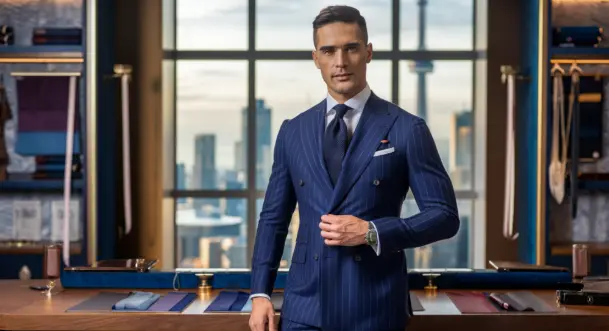
The Enduring Appeal of Custom Made Suits: Craftsmanship Meets Personal Expression
In an era of fast fashion and algorithmic recommendations, custom made suits represent something increasingly rare: clothing designed around the individual rather than the market. These garments aren’t simply better-fitting alternatives to off-the-rack options—they’re collaborations between wearer and craftsperson, resulting in pieces that reflect both personal aesthetic and centuries-old tailoring tradition.
The difference extends beyond measurements. A custom suit involves choices about fabric weight, lapel width, pocket style, and dozens of other details that collectively create a garment uniquely suited to how you move, where you work, and how you want to present yourself. This article examines what makes bespoke and made-to-measure tailoring distinct, why the investment often proves worthwhile, and how to navigate the process of commissioning your first custom piece.
The Craft Behind Bespoke Tailoring
Bespoke tailoring emerged from London’s Savile Row in the 19th century, where tailors developed techniques for creating suits from scratch based on individual client specifications. The term “bespoke” itself derives from cloth being “spoken for” by a particular customer. Unlike made-to-measure approaches that modify existing patterns, true bespoke work involves creating a unique pattern after multiple fittings, with each suit requiring 50 to 80 hours of handwork.
The process begins with a consultation where the tailor assesses posture, shoulder slope, and body asymmetries that standard sizing ignores. According to research on the history of suit construction, these individualized adjustments account for why bespoke garments drape naturally rather than pulling or bunching. A first fitting uses basted fabric to check proportions before final construction, allowing adjustments that ready-made alterations cannot achieve.
Modern bespoke houses maintain these standards while incorporating contemporary fabrics and styles. The essential elements remain unchanged: hand-sewn buttonholes, canvas interfacing shaped to the client’s chest, and armholes cut high enough to allow natural movement without excess fabric.
Why Custom Suits Outperform Ready-Made Options
The advantages of custom tailoring become apparent in both immediate fit and long-term value:
- Precise Fit: Measurements account for dropped shoulders, longer arms, or other variations that standard sizing cannot accommodate, eliminating the compromises inherent in S/M/L/XL categories.
- Fabric Selection: Access to mill-direct cloths means choosing from weights and weaves appropriate to your climate and wearing schedule, from tropical wools to heavyweight flannels.
- Construction Quality: Full canvas construction, functional buttonholes, and reinforced stress points extend garment life significantly beyond fused alternatives.
- Style Customization: Control over details like lapel width, trouser break, and pocket configuration ensures the suit aligns with your aesthetic rather than current retail trends.
- Longevity: Quality custom suits often last 10-15 years with proper care, making the per-wear cost competitive with replacing cheaper suits every few seasons.
The initial investment typically ranges from $800 for made-to-measure to $3,000+ for full bespoke, but the cost-per-wearing calculation shifts dramatically when a suit remains in regular rotation for a decade.
Toronto’s Custom Tailoring Landscape
Toronto has developed a particularly robust custom suiting scene, supported by both the city’s professional workforce and its multicultural tailoring traditions. The concentration of options spans from traditional European-trained tailors to contemporary studios experimenting with unconventional fabrics and silhouettes.
Several factors make Toronto notable for custom menswear:
- Diverse Expertise: Tailors trained in Italian, British, and Asian cutting traditions offer distinct house styles, from the soft shoulders of Neapolitan tailoring to the structured British drape.
- Competitive Pricing: The market supports both accessible made-to-measure services and high-end bespoke houses, creating options across budget ranges.
- Fabric Access: Established relationships with mills like Loro Piana, Scabal, and Holland & Sherry mean access to seasonal collections typically reserved for major markets.
- Consultation Approach: Many Toronto tailors emphasize education during fittings, explaining construction choices and style implications rather than simply executing orders.
For those exploring custom suits near you, Toronto’s tailoring district along Queen Street West and in the Financial District provides concentrated options for comparison shopping. Established firms like Soren Custom, Garrison Bespoke, and Tom’s Place offer diverse approaches to custom menswear, from traditional bespoke to modern made-to-measure services that combine quality construction with contemporary styling.
Understanding Suit Measurements and Fit
Accurate measurement forms the foundation of successful custom tailoring, but the process involves more than recording numbers. Professional tailors assess how you stand, where your weight distributes, and how your shoulders naturally sit—factors that influence pattern adjustments beyond simple chest and waist dimensions.
Key measurement considerations include:
- Timing Consistency: Body measurements fluctuate throughout the day due to posture fatigue and fluid retention. Schedule fittings at consistent times, ideally mid-morning after you’ve been active but before end-of-day swelling.
- Wearing Appropriate Clothing: Arrive in dress shoes and a fitted shirt to establish accurate posture and proportion. Sneakers alter your stance; bulky clothing obscures your actual dimensions.
- Communication About Use: Specify whether the suit is for daily office wear, occasional events, or specific activities. A suit for frequent sitting requires different ease allowances than one worn primarily while standing.
- Movement Testing: During fittings, perform natural movements—reaching forward, sitting, raising arms. The jacket should accommodate these actions without pulling across the back or restricting shoulders.
- Periodic Remeasurement: Body dimensions shift with age, fitness changes, and weight fluctuation. Remeasure every 18-24 months or after significant physical changes.
The difference between adequate and excellent fit often comes down to details like sleeve pitch (the angle at which sleeves attach to accommodate forward-rotated shoulders) and back balance (how the jacket sits relative to your spine curve). These adjustments distinguish custom work from alterations to ready-made garments.
Selecting a Custom Suit Maker
Choosing a tailor involves evaluating both technical capability and stylistic alignment. Not all skilled tailors work in every style tradition, and finding one whose aesthetic matches your preferences matters as much as their construction quality.
Consider these factors during your search:
- Portfolio Review: Examine completed work for consistency in details like lapel roll, collar fit, and trouser drape. Look for clean lines and balanced proportions rather than trendy details that may date quickly.
- Construction Transparency: Reputable tailors explain their canvas type (full, half, or fused), stitching methods, and whether work is done in-house or outsourced. Avoid vague answers about “quality construction.”
- Fabric Sourcing: Ask about mill relationships and whether you can examine cloth books in person. Direct mill access typically indicates established trade relationships and better pricing.
- Alteration Policy: Clarify what adjustments are included post-delivery and how long the tailor retains your pattern. Reputable makers offer at least one complimentary adjustment and store patterns for future orders.
- Timeline Realism: True bespoke requires 8-12 weeks minimum for multiple fittings. Made-to-measure typically takes 4-6 weeks. Be skeptical of promises for faster turnaround without understanding what’s being compressed.
The distinction between made-to-measure and bespoke matters for both cost and outcome. Made-to-measure modifies existing patterns to your measurements—a solid approach for standard builds that yields good results at moderate cost. Bespoke creates unique patterns through multiple fittings, necessary for bodies with significant asymmetries or proportion variations but requiring substantially more investment.
Custom Menswear as Personal Expression
Beyond fit and construction, custom tailoring offers something increasingly difficult to find in contemporary menswear: genuine individuality. The choices you make—fabric texture, lining color, lapel width, trouser pleating—accumulate into a garment that reflects specific preferences rather than algorithmic predictions of what “people like you” typically buy.
This level of personalization has historical precedent. Writers, artists, and public figures have long used distinctive tailoring as part of their personal presentation. The sartorial signatures of literary figures demonstrate how clothing choices become inseparable from public identity—Tom Wolfe’s white suits, Joan Didion’s precisely tailored separates, or Truman Capote’s attention to fabric and color.
Contemporary custom tailoring allows similar expression through:
- Fabric Personality: Choosing between crisp worsteds, textured tweeds, or unconventional blends like wool-linen-silk communicates formality level and aesthetic sensibility.
- Silhouette Decisions: Jacket length, shoulder padding, and trouser rise collectively create a silhouette that can reference specific style eras or create contemporary hybrids.
- Detail Customization: Functional sleeve buttonholes, contrast stitching, or personalized linings add individual touches visible only to you or in specific contexts.
- Wardrobe Cohesion: Working with one tailor over time creates a consistent aesthetic across multiple garments, building a wardrobe with intentional coherence rather than accumulated randomness.
The process itself—discussing preferences, examining fabrics, attending fittings—creates investment in the garment that affects how you wear and maintain it. Custom suits typically receive better care and more thoughtful styling than off-the-rack purchases, extending their functional life and aesthetic relevance.
The Case for Custom Tailoring
Custom made suits represent an intersection of craft tradition, personal expression, and practical investment. While the upfront cost exceeds ready-made alternatives, the combination of superior fit, construction quality, and individual customization creates value that compounds over years of wear.
The essential advantages include:
- Fit precision that accommodates individual body variations impossible to address through standard sizing
- Construction methods that extend garment life significantly beyond fused, machine-made alternatives
- Style customization that reflects personal aesthetic rather than mass-market trends
- The satisfaction of wearing something created specifically for you through collaborative craftsmanship
Whether you’re exploring options in Toronto’s diverse tailoring scene or working with an established maker elsewhere, the process rewards patience and clear communication. Start with understanding your needs—how formal, how often worn, what climate—then find a tailor whose style sensibility and construction approach align with those requirements.
Custom tailoring isn’t about luxury for its own sake. It’s about commissioning clothing that functions better, lasts longer, and reflects who you are more accurately than anything selected from a rack ever could. In a market increasingly dominated by disposable fashion and algorithmic sameness, that represents genuine value.
Also Read–Why Are Handmade Rugs So Expensive? (The Real Reasons)
