
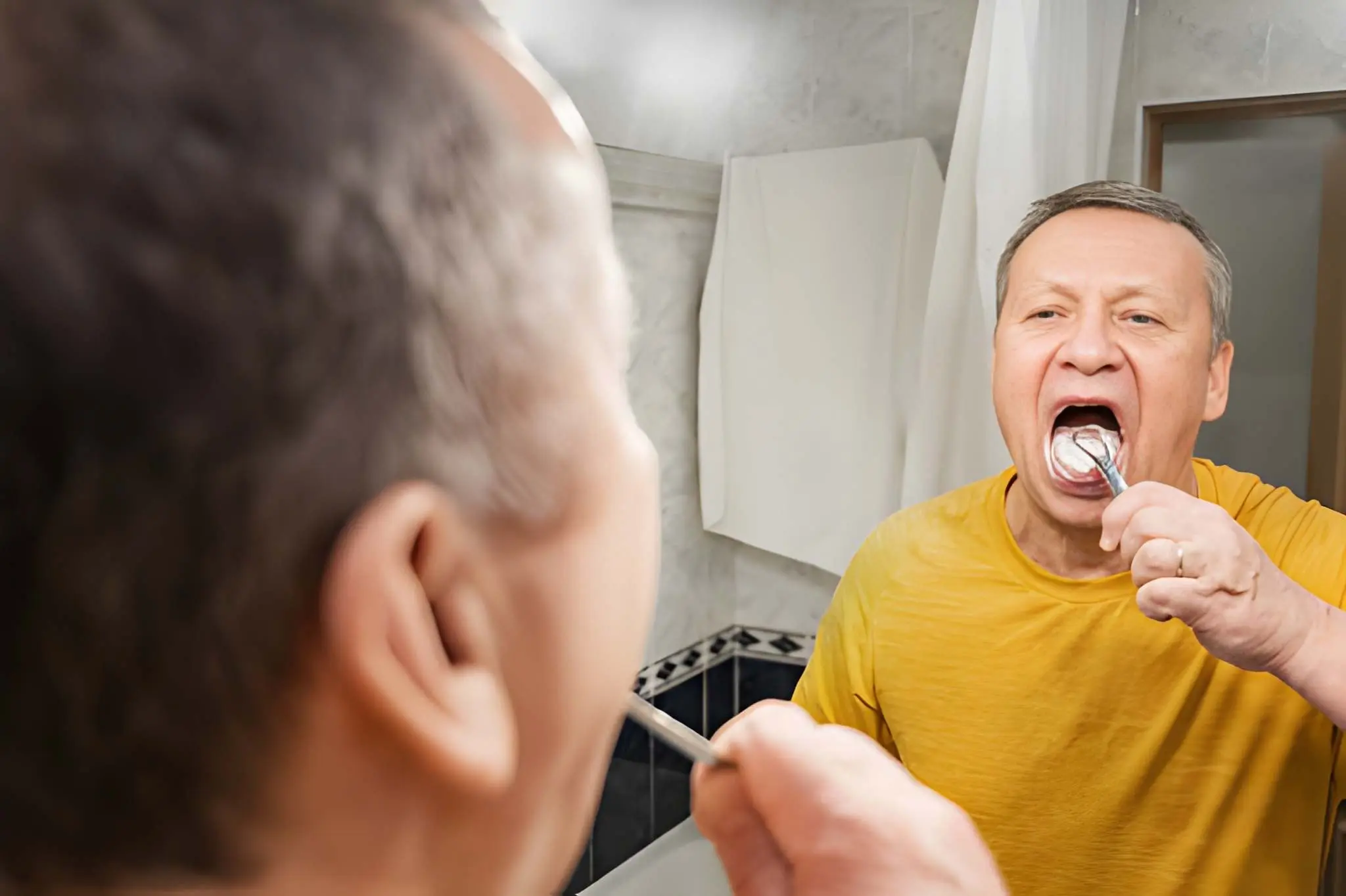
7 Oral Health Issues That Can Quickly Turn Into Emergencies for Seniors
A resident in your care stops eating their favourite soup. They seem quieter. Something feels off.
It’s easy to blame medication or a low day, but in aged care, dental problems rarely show up as clear pain. They appear as small behaviour changes, and those signs are often missed.
That’s how issues escalate. A minor cavity can become an infection. A loose tooth can turn into a choking risk. Dentures that don’t fit can cause discomfort while eating and lead to sudden weight loss. In older adults, this can happen quickly.
At Aged Care Dentistry, we’re usually called once pain is severe and distress is obvious. Almost every time, we hear, “We didn’t realise it was this bad.” And often, it didn’t have to reach that point.
That’s why we’re here. We’ll walk you through the seven oral health issues that most often turn into emergencies and show you what to watch for earlier. This is how emergency dental visits at aged care homes made easy become possible – calm, timely, and far less stressful for everyone.
Let’s get started.
Issue #1: Dental Abscesses and Silent Oral Infections
A dental abscess is a serious infection, not just a sore tooth. In seniors, it often develops quietly, without obvious pain or a high fever. That’s what makes it dangerous.
Many older adults don’t complain, can’t explain what hurts, or show pain in clear ways. Instead, the infection keeps spreading while everything looks “mostly fine.”
What you may notice instead are small but telling changes:
- Refusing food, especially anything hard or chewy
- Becoming upset or resistant during mouth care
- Touching the face or jaw repeatedly
- Mild swelling or a low-grade temperature
These signs are often mistaken for behaviour changes or a bad day, and that delay matters. An untreated abscess can spread beyond the mouth and, in serious cases, lead to sepsis and hospitalisation.
Catching it early keeps treatment simple and recovery easier. Missing it turns a manageable problem into a medical emergency.
Issue #2: Severe or Persistent Toothache
A constant toothache is never a normal part of ageing. It’s always a warning sign that something has gone wrong inside the tooth.
The problem is that many seniors can’t describe the pain clearly. Dementia, communication difficulties, or strong pain medication can dull or hide it. So instead of hearing “my tooth hurts,” you see the effects.
A persistent toothache usually means one of three things:
- Deep decay reaching the nerve
- An infected or dying nerve
- A crack running down toward the root
If it’s ignored, the pain doesn’t fade. The infection spreads, and what started as an ache can turn into an abscess in days.
The impact goes beyond the mouth. Ongoing pain disrupts sleep, makes eating difficult, and quickly leads to agitation, confusion, or withdrawal. A resident may resist mouth care, refuse meals, or seem suddenly distressed for no clear reason.
It’s easy to label this as a behavioural change. Often, it’s untreated pain.
Addressing the toothache early does more than fix a dental problem. It restores comfort, sleep, and the ability to eat. Most importantly, you see the person settle and feel like themselves again.
Issue #3: Broken, Cracked, or Loose Teeth
Teeth naturally become fragile with age. Decades of wear make them more likely to break from everyday activities.
A minor fall, biting something hard, or even a hidden seed can crack or chip a tooth. Sometimes it causes pain right away, but often the danger is hidden.
Cracks and breaks create serious risks:
- Sharp edges can scrape the tongue or cheek, causing painful sores.
- Cracks can let bacteria reach the nerve and root, leading to infection.
- Loose teeth can dislodge suddenly, becoming a choking hazard.
Small cracks or chips may go unnoticed at first. But if ignored, they can fracture further, expose the nerve, or trigger an infection that spreads quickly.
Early action makes all the difference. Minor cracks can often be capped or bonded to preserve the tooth. Waiting too long usually leads to infection, pain, and the need for extraction, which affects chewing and overall health.
Spotting these issues early protects comfort, prevents emergencies, and keeps residents eating and living safely.
Issue #4: Ill-Fitting, Broken, or Lost Dentures
Over time, the bone and gums shrink, but dentures don’t adjust. A denture that fit perfectly years ago can become loose or unstable today. That small looseness can quickly lead to bigger problems.
Ill-fitting dentures rub against sensitive gums with every bite and every word. This friction causes painful sores and ulcers, creating entry points for infection. Cracks or broken pieces make it worse, cutting soft tissue or leaving the resident unable to chew.
The effects show up fast:
- Skipped meals, soft or low-protein foods, rapid weight loss, and dehydration
- Difficulty speaking, embarrassment, and social withdrawal
- A resident leaving dentures in a cup or drawer is a quiet but serious warning sign
Ignoring these issues can compromise nutrition, oral health, and overall quality of life.
Early intervention matters. Dentures can often be repaired or adjusted on-site. Even new impressions can be taken without leaving the facility. When the fit is corrected, pain stops, meals become comfortable, and confidence and social interaction return.
Issue #5: Advanced Gum Disease (Periodontitis)
Advanced gum disease is a hidden threat. The infection attacks the gums and the jawbone that support the teeth, often without obvious signs.
Early stages may just cause minor bleeding. By the time it’s noticeable, the damage can be serious. Bone loss creates pockets where bacteria thrive, and a sudden flare-up can trigger an acute periodontal abscess.
Signs to watch for include:
- Red, swollen, or painful gums
- Pus around teeth
- Loose teeth
- Facial swelling
This infection doesn’t just stay in the mouth. It can enter the bloodstream, raising inflammation and worsening other conditions like diabetes or heart disease.
Proactive care makes a difference. Gentle, regular professional cleanings and careful observation, like noting red gums or loose teeth, can control the infection early. Catching it in time means treatment is calm and non-invasive, preventing severe pain, emergency abscesses, or complex extractions later.
Issue #6: Unexplained Facial Swelling or Soft-Tissue Trauma
Facial swelling is never normal. It often signals a dental infection spreading beyond a single tooth.
Even minor bumps can fracture a tooth or loosen a root. The bruise fades, but infection can form days later. Waiting is dangerous because these infections won’t fix themselves.
Prompt assessment is key. A professional can tell if it’s a bruise or an abscess and start treatment immediately. Draining infection and prescribing antibiotics early prevents escalation and hospital transfers.
Recognising swelling quickly is one of the fastest ways to make emergency dental visits at aged care homes made easy.
Issue #7: Knocked-Out or Avulsed Teeth
A knocked-out tooth is a true emergency. There’s a 60-minute window to save it.
Act fast:
- Pick up the tooth by the crown, never the root.
- Rinse gently with milk or saline.
- Keep it moist, ideally back in the socket or in milk/saline.
- Control bleeding with clean, gentle pressure.
Quick action preserves the tooth and prevents infection. Mobile emergency care allows prompt treatment on-site, stabilising the tooth and pain without stressful travel.
Awareness is the First Line of Defence
You now know the seven silent signals. That knowledge changes everything.
You’re no longer just reacting to pain; you’re preventing it. Noticing a loose denture or slight cheek swelling today can stop a serious infection or nutritional crisis tomorrow. Your observation is the most powerful tool when a resident can’t speak for themselves.
At Aged Care Dentistry, we work alongside your vigilance. Our mobile service brings expert care to the resident’s bedside, helping small problems stay small. Early attention and quick action keep residents comfortable, safe, and confident.
This is how emergency dental visits at aged care homes made easy becomes real – calm, effective, and proactive care that protects health, dignity, and wellbeing.
Also Read-How Serrapeptase Liver Therapy Can Enhance Your Health
