
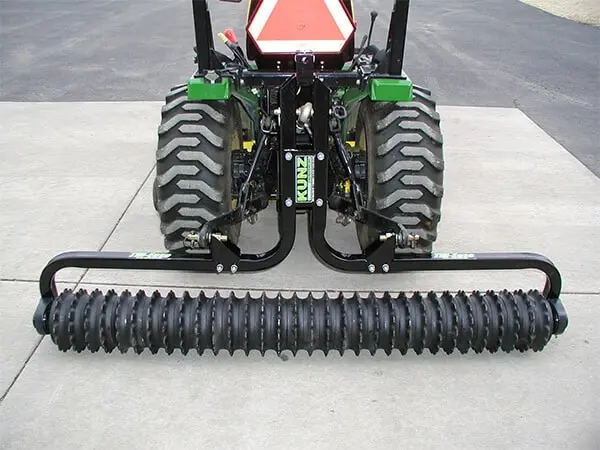
How an ATV Cultipacker Transforms Small-Scale Farming
For hobby farmers and small-plot managers, soil preparation often determines the difference between a thriving food plot and a disappointing yield. An ATV cultipacker—a compact implement that attaches to all-terrain vehicles—addresses one of the most persistent challenges in small-scale agriculture: achieving consistent seed-to-soil contact across uneven terrain.
The tool’s design is straightforward but effective. Heavy rollers press soil firmly around freshly planted seeds, eliminating air pockets that can dry out germinating seedlings. This compression also breaks up clumps left behind by tilling, creating a uniform seedbed that promotes even emergence. For anyone managing wildlife food plots, pasture restoration projects, or small-scale crop production, the difference in germination rates can be substantial.
The advantages extend beyond germination:
- Soil structure improvement: Compression creates optimal particle arrangement for root development
- Moisture retention: Firm seedbeds reduce evaporation and protect against erosion
- Time efficiency: ATV-mounted operation covers ground faster than manual methods
- Reduced seed waste: Better contact means fewer seeds lost to wind, water, or predation
This article examines how cultipackers improve soil health and crop establishment, what to consider when selecting equipment for ATV or UTV use, essential complementary tools for food plot development, maintenance practices that extend equipment life, and where to find quality implements.
The Soil Science Behind Cultipacking
Cultipacking works by addressing a fundamental agricultural problem: the gap between seed and soil. When seeds sit in air pockets or rest on loose soil, moisture doesn’t transfer efficiently to the seed coat. Germination stalls or fails entirely. The weighted rollers of a cultipacker eliminate these gaps, pressing seeds into firm contact with soil particles.
This compression serves multiple functions. It stabilizes the soil surface, reducing erosion from wind and rain—a critical concern on sloped terrain or in areas with sparse vegetation. The firmer surface also improves water infiltration patterns, allowing moisture to move through the soil profile rather than running off or pooling.
Research on soil health principles from the Natural Resources Conservation Service emphasizes the importance of proper seedbed preparation for establishing healthy plant communities. A well-prepared seedbed allows roots to penetrate efficiently, accessing nutrients and water throughout the growing season.
Additional benefits include:
- Enhanced microbial activity: Proper soil structure supports beneficial organisms that cycle nutrients
- Improved stand uniformity: Even germination produces consistent plant populations
- Reduced replanting costs: Higher success rates on the first planting attempt
- Better weed competition: Dense, uniform crop stands suppress weed establishment
For small-scale operations where every seed matters, these improvements translate directly to better outcomes. The investment in proper soil preparation pays dividends throughout the growing season.
Selecting Equipment for Your Operation
Matching a cultipacker to your vehicle and terrain requires evaluating several factors. The wrong choice can result in inadequate soil compression, equipment damage, or safety hazards.
Key considerations include:
- Vehicle capacity: Check your ATV or UTV’s towing specifications and hitch rating before selecting equipment weight
- Working width: Wider implements cover ground faster but require more power and maneuverability
- Roller design: Smooth rollers work well in fine-textured soils; ribbed or cage designs handle rocky or clay-heavy ground
- Frame construction: Welded steel frames withstand years of field use; lighter materials may suffice for occasional hobby use
- Hitch compatibility: Verify that mounting hardware matches your vehicle’s receiver size and pin configuration
Terrain characteristics matter significantly. Rocky ground demands heavier construction and potentially smaller roller diameters that can navigate obstacles. Clay soils benefit from aggressive roller patterns that break up dense clumps. Sandy or loamy soils work well with standard smooth rollers.
For operations managing multiple acres or working in challenging conditions, UTV-mounted implements offer advantages. The additional power and stability of a utility vehicle allows for wider working widths and heavier construction. When shopping for ATV-compatible models, brands like PackerMaxx, Field Tuff, and Agri-Fab offer implements designed specifically for the power range and hitch configurations common on recreational and utility ATVs.
Weight distribution also affects performance. Implements with adjustable ballast allow operators to fine-tune compression based on soil conditions. Some models include seed boxes mounted above the rollers, combining two operations—seeding and packing—in a single pass.
Building a Complete Food Plot System
A cultipacker functions as part of a larger equipment system. Successful food plot establishment requires coordinated soil preparation, seeding, and maintenance operations.
Essential implements include:
- Disc harrow: Cuts and turns soil, incorporating residue and breaking up compacted layers
- Cultipacker: Firms seedbed and ensures seed-to-soil contact
- Broadcast spreader: Distributes seed evenly across prepared ground
- Sprayer: Applies pre-emergent herbicides, fertilizers, or post-emergent weed control
- Drag harrow: Smooths soil surface and incorporates broadcast seed before packing
The typical workflow follows a logical sequence. First, disc the plot to break up existing vegetation and turn the soil. This creates a rough seedbed with good tilth but poor seed contact. Next, use a drag harrow to level the surface and break up large clumps. Broadcast seed across the prepared area, then make a final pass with the cultipacker to press seeds into the soil.
According to recent analysis of conservation tillage practices, proper seedbed preparation significantly impacts establishment success, particularly in no-till or minimum-till systems where soil disturbance is limited.
Timing matters as much as equipment. Spring plantings benefit from soil that has dried enough to avoid compaction but retains sufficient moisture for germination. Fall food plots require attention to first frost dates—planting too late results in insufficient growth before winter dormancy.
Equipment sequencing can be adapted based on conditions. In dry years, a single pass with a cultipacker after broadcasting may suffice. Wet conditions might require additional discing to improve drainage before seeding. Rocky ground may need multiple passes with lighter pressure rather than a single heavy compression.
Maintenance Practices That Extend Equipment Life
Field implements endure harsh conditions—soil abrasion, moisture exposure, impact loads from rocks and roots. Regular maintenance prevents premature wear and ensures consistent performance.
Critical maintenance tasks include:
- Post-use cleaning: Remove packed soil, plant material, and debris after each use to prevent rust and bearing damage
- Bearing inspection: Check roller bearings for play or roughness; replace at first sign of wear
- Lubrication schedule: Grease all fittings before storage and after extended use periods
- Frame examination: Inspect welds and mounting points for cracks or stress damage
- Hardware tightness: Verify that all bolts, pins, and fasteners remain secure
- Paint touch-up: Address scratches and chips promptly to prevent rust spread
Storage conditions significantly affect longevity. Equipment left outdoors deteriorates faster than implements stored under cover. Even a simple tarp or lean-to shelter protects against direct precipitation and UV exposure. Elevating equipment off the ground prevents moisture wicking from soil contact.
Bearing failure represents the most common maintenance issue. Sealed bearings resist contamination better than open designs, but all bearings eventually wear. Carrying spare bearing assemblies allows for field repairs rather than mid-season downtime. Most roller bearings use standard sizes available from industrial suppliers.
Roller surface condition also requires attention. Smooth rollers develop flat spots if stored with weight on one position for extended periods. Rotating rollers quarterly during off-season storage prevents this issue. Ribbed or cage-style rollers accumulate packed soil in crevices; power washing before storage prevents hardened deposits that affect performance.
Sourcing Quality Equipment
The cultipacker market includes everything from light-duty hobby models to commercial-grade implements. Finding the right balance between capability and cost requires understanding where and how to evaluate options.
Primary purchasing channels include:
- Agricultural equipment dealers: Offer new equipment with warranty support and often provide assembly and initial setup
- Online retailers: Provide broader selection and competitive pricing, though shipping costs for heavy implements can be substantial
- Farm auctions and estate sales: Source for used equipment at reduced prices, but condition varies widely
- Direct manufacturer sales: Some companies sell directly to end users, eliminating dealer markup
When evaluating specific models, prioritize construction quality over features. Heavy-gauge steel frames and quality bearings outlast lighter designs regardless of additional accessories. Welds should show consistent penetration without gaps or porosity. Roller surfaces should be true and balanced—wobbling indicates poor manufacturing or damage.
Used equipment requires careful inspection. Check bearing play by attempting to move rollers side-to-side on their axles. Excessive movement indicates worn bearings. Examine frame members for cracks, particularly near welds and mounting points. Surface rust is cosmetic, but pitting or scaling suggests advanced corrosion that compromises structural integrity.
Price ranges vary considerably. Entry-level models suitable for small food plots start around $300-400. Mid-range implements with better construction and wider working widths run $600-1,200. Commercial-grade equipment designed for frequent use exceeds $1,500. For most hobby applications, mid-range equipment provides the best value—durable enough for years of seasonal use without commercial-grade expense.
Customer reviews offer insight into real-world performance, but consider the reviewer’s application. An implement that works well for annual half-acre food plots may prove inadequate for someone managing ten acres of pasture renovation. Match the equipment’s design intent to your actual use case.
Implementing Effective Soil Preparation
Understanding how to use a cultipacker effectively requires more than simply pulling it across a field. Soil conditions, timing, and technique all influence results.
Optimal soil moisture sits in a narrow range. Too wet, and the cultipacker creates compaction that restricts root growth and water infiltration. Too dry, and soil particles don’t bind together—seeds remain in loose contact that dries out quickly. The ideal condition allows soil to form a ball when squeezed but crumbles easily when disturbed. This “friable” state provides enough moisture for seed germination while maintaining good structure.
Operating speed affects compression uniformity. Faster speeds reduce the time rollers spend in contact with any given point, resulting in lighter compression. Slower speeds increase compression but reduce efficiency. Most applications work best at 3-5 mph—fast enough to cover ground efficiently while maintaining consistent pressure.
Multiple passes in different directions improve uniformity, particularly on uneven terrain. The first pass in one direction, followed by a perpendicular second pass, eliminates high spots and fills low areas more effectively than a single pass. This cross-pattern approach also helps on slopes where a single direction might allow the implement to drift or skip.
Seed size influences cultipacker timing. Large seeds like corn or beans benefit from packing immediately after planting—the weight presses seeds to proper depth while firming soil around them. Small seeds such as clover or brassicas work better with a light packing before broadcasting, followed by a second pass after seeding. The first pass creates a firm base; the second presses small seeds into surface contact without burying them too deeply.
Maximizing Your Investment
An ATV cultipacker represents a significant investment for hobby farmers and small-scale operators. The equipment’s value extends beyond a single season when properly selected, maintained, and operated. Understanding soil science principles, matching equipment to specific conditions, and following systematic maintenance protocols ensures years of reliable performance.
The key factors for success include:
- Selecting equipment matched to your vehicle’s capacity and your terrain’s characteristics
- Operating at appropriate soil moisture levels and speeds for uniform compression
- Maintaining bearings, frames, and roller surfaces through regular inspection and lubrication
- Storing equipment properly during off-season periods
- Integrating cultipacking into a complete soil preparation system with complementary implements
For those managing wildlife food plots, pasture improvement projects, or small-scale crop production, the difference between adequate and excellent soil preparation often determines success. A cultipacker transforms loose, clumpy seedbeds into firm, uniform planting surfaces that maximize germination rates and establish healthy plant stands. The investment pays returns in reduced seed waste, better yields, and more consistent results across varying conditions.
Also Read
