
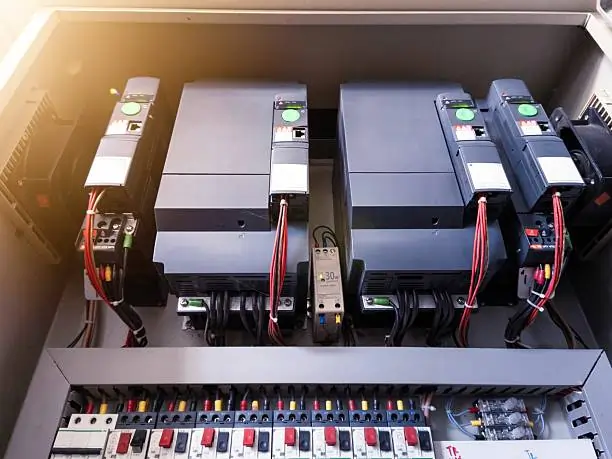
How a VFD Drive Delivers Precision Control for Industrial Motors
Industrial operations depend on accurate motor behavior to maintain stability, support demanding applications, and protect critical electrical instruments. Precision is essential because fluctuating loads and varying production conditions require controlled torque and consistent speed.
Variable Frequency Drives (VFDs) provide the necessary flexibility, allowing operators to adjust motor performance without compromising reliability. Production environments rely deeply on responsive systems that maintain steady output and minimize disruption. This is where a high-efficiency VFD drive motor-control system becomes essential for creating adaptable, stable, and energy-aware industrial processes.
A VFD drive regulates electrical frequency and voltage to improve motor responsiveness, reduce mechanical strain, and maintain precise performance. Continue reading to understand how this advanced technology enhances safety, reliability, and operational consistency across industrial environments.
The Science Behind Precision: How a VFD Works
A VFD converts Alternating Current (AC) into Direct Current (DC), then reconstructs it using Pulse Width Modulation (PWM) for accurate motor regulation. This process helps operators manage torque, voltage, and rotational speed with greater precision.
A modern VFD drive control architecture also improves electrical stability by delivering cleaner output signals under dynamic load variations.
- How VFD Technology Regulates Frequency and Voltage
The VFD drive adjusts frequency to control motor speed and regulates voltage to maintain torque stability, ensuring predictable performance under variable operational demands.
- How PWM Ensures Smooth Operation
The PWM signal produces controlled pulses that limit torque ripple and thermal stress, protecting connected electrical instruments from unnecessary wear.
- How Intelligent Monitoring Protects Industrial Motors
Integrated sensors measure temperature, current flow, and overload conditions, enabling early corrective action that prevents mechanical damage and unplanned shutdowns.
Why Industries Rely on VFD Technology for Enhanced Motor Control
Industrial environments depend on this technology to achieve accurate torque management, smooth acceleration, and balanced electrical distribution across complex equipment networks. These capabilities help maintain predictable performance under diverse operational pressures.
A well-configured VFD drive optimization system supports process uniformity by eliminating abrupt electrical fluctuations.
- It allows precise speed adjustment for applications needing controlled acceleration and uniform rotation, ensuring stable process outcomes in sensitive industrial environments.
- It limits torque spikes during start-stop cycles, protecting electrical devices and reducing wear on assemblies, thereby maintaining smoother, safer operational transitions.
- It enhances energy efficiency by matching electrical output to real-time load requirements, reducing unnecessary consumption, and supporting long-term industrial cost management.
- It delivers constant torque for conveying, mixing, pumping, and compressing tasks, supporting coordinated industrial movement and improving reliability across connected equipment.
- It reduces vibration and mechanical strain by maintaining smoother motion curves, improving equipment durability, and protecting critical components during continuous operation.
Designing an Efficient System: Choosing and Integrating the Right VFD
Correct VFD drive selection requires matching current capacity, voltage rating, and environmental conditions to the motor’s operational requirements. Proper alignment prevents overheating, reduces imbalance, and improves long-term reliability.
A correctly integrated VFD drive installation framework reduces system errors, strengthens equipment harmony, and ensures stable performance in demanding environments. Choosing the right VFD strategy improves controlled operation, supports safer processes, and helps maintain efficient energy behavior across interconnected electrical systems.
Partnering for Smarter Energy Use and Precision Motor Control
A future-ready VFD drive implementation strategy helps industries improve precision, optimize energy efficiency, and maintain dependable performance across varied electrical conditions. These systems enhance coordination between electrical devices, reduce harmful load variations, and enable adaptive responses that support safe operation.
They protect equipment by limiting electrical stress, reducing wear, and supporting more stable process flows across integrated networks. When organizations incorporate modern drive technology into their infrastructure, they create a stronger foundation for dependable industrial control.
Partnering with a reputable electrical brand ensures accurate integration, consistent engineering alignment, and long-term operational benefits for evolving industrial requirements. Take the next step and choose a partner that strengthens every phase of your operations.
Read more: AureliusHub.com Review: Where Technology Meets Smart Investing
How Accurate Measurements Can Streamline Insurance Claims – SizeCrafter
