
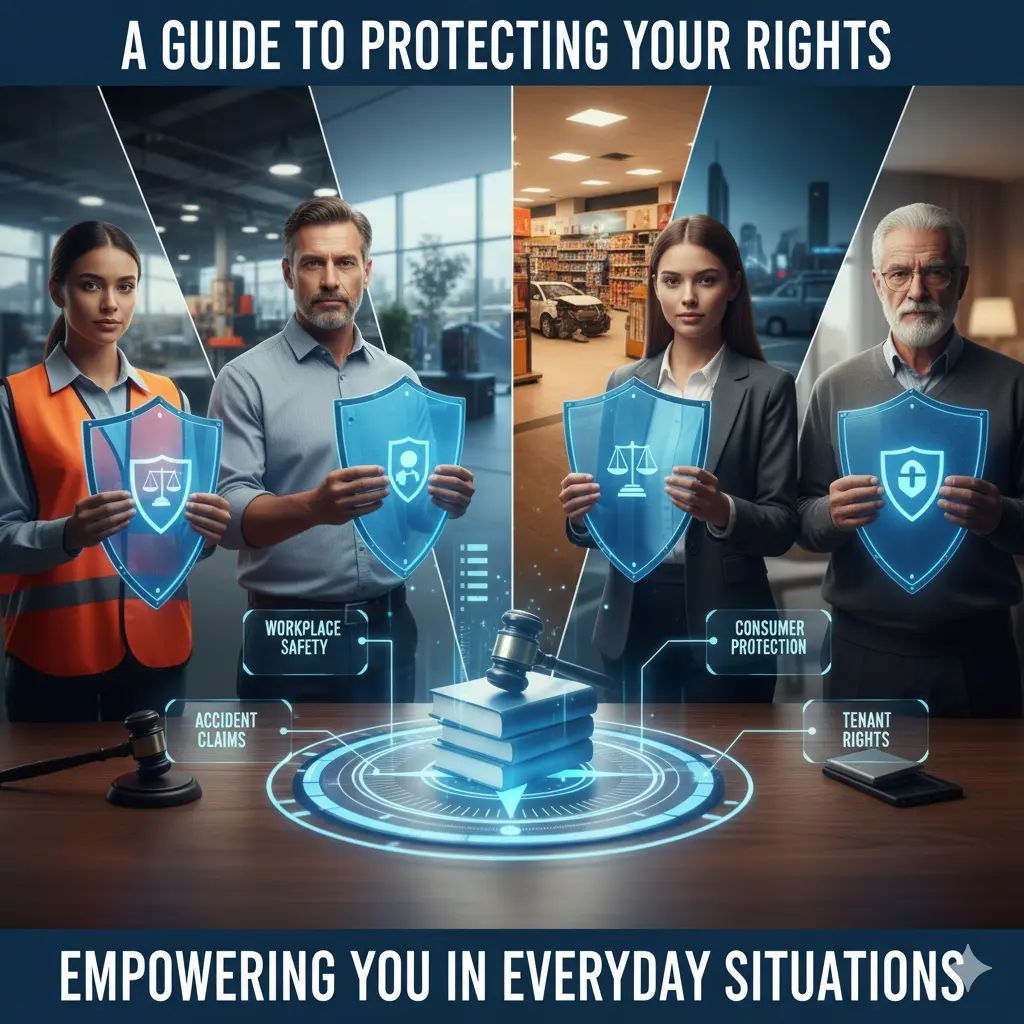
A Guide to Protecting Your Rights
Life is unpredictable. One moment you’re going about your daily routine, and the next, you may find yourself facing a situation that challenges your sense of security, fairness, or even safety. Protecting your rights isn’t just about knowing the laws—it’s about understanding how those laws apply to real-life situations, and what steps you can take when life throws you a curveball.
In this guide, we’ll break down how to safeguard your rights in everyday circumstances, from workplace issues to car accidents, with clear, relatable examples that show why this knowledge is so important.
Why Protecting Your Rights Matters
Think of your rights as a shield. Whether you’re at work, on the road, or making a big financial decision, they’re what protect you from unfair treatment and exploitation. Without awareness of these safeguards, it’s easy to overlook when something isn’t right.
For example, consider a factory worker who’s denied proper breaks or asked to handle unsafe equipment. If they don’t understand occupational safety standards, they may accept dangerous conditions without protest. Similarly, a tenant who is unaware of housing laws may end up paying for repairs that should legally be the landlord’s responsibility.
Your rights don’t just exist on paper—they are practical tools for daily life.
Everyday Scenarios Where Rights Play a Role
At Work
Imagine you’re working long hours in retail, often asked to skip breaks to keep the store running. While it may feel like “just part of the job,” employment laws are in place to ensure fair treatment. Knowing these rights allows you to advocate for yourself without fear of unnecessary repercussions.
As a Consumer
You’ve probably experienced faulty products such as a home appliance that stops working just weeks after purchase. Consumer protection laws can entitle you to a refund, repair, or replacement. Many people throw away defective items out of frustration, but the law often provides a solution.
On the Road
Driving is a daily activity for millions, but it’s also one of the most common areas where legal rights come into play. If you’re injured in an accident caused by someone else, you shouldn’t have to bear the financial and emotional burden alone. This is where knowing the right steps and the right people to turn to can make all the difference.
Steps to Safeguard Your Rights
Stay Informed
Laws may feel overwhelming, but you don’t need to memorize every statute. Instead, stay informed about the rights most relevant to your life like workplace rules, consumer protections, and safety regulations. For example, knowing that product warranties often apply even if you’ve lost the receipt can save you money and stress.
Document Everything
Whether it’s a workplace dispute, a faulty purchase, or a car accident, documentation is your strongest ally. Emails, receipts, photos, and written notes create a record that can back up your claims if you need to escalate the issue.
Seek Help When Needed
Sometimes, protecting your rights means reaching out to professionals. For medical issues, that may be a doctor. For financial disputes, it may be advisable to consult an advisor. And when legal complexities arise particularly after accidents it may mean seeking the guidance of the Best Lawyer for Car Accidents. Their expertise can help you navigate claims, deal with insurance companies, and secure the compensation you deserve.
Learning From Real-World Examples
History is full of lessons about the importance of protecting rights. The evolution of labor laws, for instance, came from years of workers fighting for safer conditions and fair wages. Modern road safety laws were developed following decades of advocacy, research, and recognition of the dangers associated with distracted or impaired driving. These examples remind us that rights are not static they grow and adapt to meet the challenges of modern life.
Even in personal experiences, the difference between knowing your rights and not knowing them can be stark. Picture two drivers involved in similar accidents: one documents everything, consults legal advice, and receives fair compensation; the other relies solely on verbal assurances from the other party and ends up paying thousands out of pocket. The outcome isn’t about luck—it’s about preparedness.
Building a Rights-Conscious Mindset
Protecting your rights is less about confrontation and more about empowerment. It’s about having the confidence to ask the right questions, the presence of mind to gather evidence, and the wisdom to seek support when situations get complicated.
One way to build this mindset is through continuous learning. Reading about civil rights, workplace protections, or everyday consumer laws can help you become more confident when issues arise. Another approach is to discuss these topics openly with family and friends. Sharing knowledge can prevent others from falling into avoidable pitfalls.
Final Thoughts
Your rights exist to protect you, but they only work if you use them. Whether you’re clocking in at work, signing a lease, making a big purchase, or recovering from an accident, awareness and action are your strongest tools.
Think of it this way: protecting your rights isn’t about preparing for the worst—it’s about giving yourself peace of mind in the everyday. Because when life gets complicated, knowing where you stand can make all the difference.
